

Teak is prized for its natural beauty and durability. This dense tropical hardwood has a high natural oil and silica content, which makes it exceptionally resistant to rot, fungus, termites and wood-boring insects. Its warm golden-brown hue – whether in furniture, decking or flooring – adds an instant touch of luxury to any space. Indoors, teak ages to a rich honey tone; outdoors, it weathers to a silvery-gray patina if left untreated. (Many homeowners, designers and yacht owners actually prefer this elegant grey finish.) Florida Teak sources old-growth Burmese teak for marine and architectural uses, noted for its “rich golden brown luster” and unparalleled strength against the elements. In short, teak combines exceptional longevity with upscale style – but like any fine material, it needs the right care to keep it looking its best.
Key advantages of teak:
- Durability: Its natural oils repel moisture and pests.
- Stability: Teak is dimensionally stable (expanding/contracting less than many woods). Minor hairline cracks may appear but rarely affect integrity.
- Aesthetics: Develops a silver-gray patina over time, or can be sealed to keep a golden tone.
If properly maintained, teak furniture and surfaces can last decades, making it ideal for homeowners, hotels, yacht decks and high-end outdoor settings. The goal of teak care is straightforward: clean regularly and protect from the elements. Below we cover everything from routine cleaning to advanced restoration, for both indoor and outdoor teak.
Preventing Weathering and Damage
Left unattended, teak outdoors will gradually lose its golden color and turn silvery-grey. Some owners welcome this weathered look, but luxury installations often aim to preserve the original tone. Regardless, regular cleaning is essential to prevent stains and decay. Dust, pollen and organic debris can settle into teak’s grain; if left to sit, they may cause dark mildew spots or even lead to cracking as moisture is trapped. For example, pollen can clog the pores and harbor mold, so washing teak at least once a year (or every 6 months in harsh climates) is recommended.
Outdoor teak should also be shielded from the worst of the weather. Use well-fitted covers or move furniture under shelter during storms. Restoration Hardware advises always “using custom-fit outdoor covers to protect furniture from the elements and minimize aging”. This is especially important for commercial or coastal installations, where sun and salt can accelerate aging. Even on yachts, experts stress that routine gentle care (instead of neglect) dramatically slows weathering.
Cleaning Teak Wood: Simple Steps for Sparkling Finish
The first step in teak care is cleaning – ideally with mild, non-abrasive materials. In most cases a soft-bristle brush and a gentle detergent or soap is enough. For example, use warm water mixed with a little dish soap or a dedicated deck cleaner, and scrub the wood in the direction of the grain. A splash of white vinegar or a marine wood cleaner can help cut grease and grime without harming the teak. Always scrub with the grain to avoid scratching, and rinse thoroughly. Importantly, avoid harsh methods: do not use a power washer, which can etch the wood; instead, simply hose down with a garden hose or gentle spray.
- Routine Wash: Rinse off loose dirt, scrub with mild soap and water using a soft brush, then rinse again. Let the teak dry completely before any finish is applied.
- Target Mildew/Spots: If you spot black mildew or mildew stains, clean promptly. A vinegar solution (50/50 vinegar and water) or an oxygen bleach solution (wood-safe) can often remove mild mold. For tougher stains, commercial teak cleaners are formulated to brighten and sanitize teak.
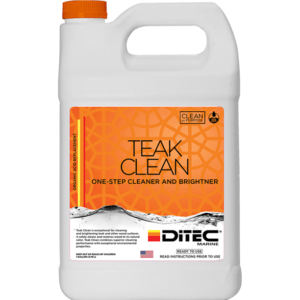
- Specialized Teak Cleaners: For heavily weathered or stained teak, a one-step teak cleaner can work wonders. For instance, Florida Teak’s TEAK CLEAN by DiTEC is an eco-friendly, non-toxic teak cleaner that safely restores the wood’s natural color. It uses organic ingredients (no harsh phosphoric acid) to strip away graying and leave the wood bright. (Always test any cleaner on a small area first, and follow label directions.)
In yachts or on boat decks, owners often use a mild detergent with a little bleach (e.g. 3/4 detergent, 1/4 bleach) to clean teak. BoatUS recommends brushing this on with a stiff brush, letting it sit briefly, then scrubbing and rinsing. If the wood is still dark after that, an oxalic-acid-based cleaner (or two-part teak cleaner) can be applied carefully to lift deep stains. Whatever method you choose, rinsing well and allowing full drying is crucial to avoid introducing moisture.
Once clean, teak looks like new. For outdoor teak furniture and decking, cleaning should occur at least annually (more in humid climates). Indoors, regular dusting and occasional wipe-downs with a damp cloth and mild wood cleaner will keep the finish clear and debris-free. In all cases, avoid abrasive scrubbing pads or steel wool, which can scratch and rust; a Scotch-Brite pad or fine sandpaper is sufficient for light touch-ups.
Oils, Sealers and Finishes: Protecting Teak’s Color
After cleaning, it’s time to protect the teak and maintain its color. The choice of finish depends on the look you want and the exposure the wood faces.
- Teak Oil: These products (usually linseed or tung oil based, often called “teak oil”) soak into the wood and enhance the warm golden tone. They are inexpensive and easy to apply with a cloth, and they bring out the grain beautifully. However, teak oil wears off quickly – especially outdoors – and must be reapplied every few months to maintain appearance. Notably, oiling is about aesthetics, not protection: teak’s lifetime is not actually extended by oil. (In fact, BoatUS notes that teak left untreated outdoors will last just as long or even longer than oiled teak.) Keep in mind that fresh linseed oil can darken the wood significantly at first, and if re-oiled too often the wood can become tacky or attract dirt.
- Sealants/UV Sealers: For true outdoor protection, many owners prefer a clear teak sealer or polymer finish. Water-based sealers (sometimes called “Golden Teak Sealer” or “Blonde Sealer”) form a thin film that blocks moisture and ultraviolet light. They often include UV inhibitors and even a slight pigment to preserve the blonde color. Country Casual Teak advises: “To restore weathered teak, first clean … then apply Golden Sealer to prevent re-graying.” After two coats, just annual recoating is needed to maintain the golden appearance. In other words, a sealer lets you keep that fresh-teak look for much longer.
- Marine Varnish: On boats and yachts, some prefer a tough marine varnish instead of oil. Varnish gives a glossy, mirror-like finish and excellent waterproofing (good for decking). However, teak’s natural oils make varnish bonding a bit tricky, and even with UV additives varnish will slowly chalk and crack under sun. It takes many coats (six or more) for a strong film, and maintenance can be laborious. Varnish is usually reserved for premium yacht decks or interior millwork where a hard, sealed surface is desired.
- Indoor Finishes: For indoor teak (tables, cabinetry, floors), polyurethane varnish or clear wood sealant is often best. These products create a moisture- and stain-resistant barrier while keeping the natural wood grain visible. Anova Bois (a wood care specialist) strongly discourages teak oil on indoor furniture, noting it tends to darken the wood and makes future finish changes difficult. Instead, they recommend a thin film-forming varnish (satin or matte) that lets you “maintain the natural look of the wood” with excellent durability. Wax finishes are another option indoors – waxing maintains an authentic matte look – but wax is less waterproof than a modern sealant.
- No Finish (Natural Patina): Remember, leaving teak unfinished is also a valid aesthetic. Many luxury resorts, rooftop lounges and yacht owners actually favor the aged gray patina of untreated teak. If this is your preference, minimal care is needed: simply clean the wood yearly to remove debris and let it silver gracefully. No oil or sealer is applied, so the finish will not protect against stains or spills – but some users prefer to just sand lightly to eliminate any stains and re-oil occasionally as needed.
Key tips: Never seal over still-wet oil – the trapped moisture can cause mildew. And once you choose a sealer, stick with it: switching back and forth between oil and sealer can lead to uneven curing. If in doubt, many experts (and Country Casual Teak) recommend going with a teak sealer for outdoor pieces, as it offers UV protection and a longer-lasting finish than oil.
Restoring Weathered Teak
For teak that has already aged or stained, the good news is restoration is very doable. The goal is to remove the grayed surface layer and any deep grime, then refinish. Here’s a general approach:
- Deep Clean: Start with the strongest mild cleaning method. Brush the teak with a detergent-bleach mix or a commercial teak cleaner as described above. For stubborn black streaks, an oxalic acid cleaner or two-step teak restore kit (caustic + acid) can be used carefully. After scrubbing, rinse thoroughly with clean water.
- Dry and Inspect: Let the wood dry completely. If the surface still looks dull or raised, use a fine-grit sandpaper (e.g. 180–220 grit) or synthetic abrasive pad to lightly sand in the grain direction. This will remove any still-gray fibers and smooth the surface. (Avoid aggressive sanding – you only need to remove the top grayish layer.) After sanding, brush away dust and rinse again if needed.
- Finish: Once clean and dry, reapply your finish of choice. If preserving color, apply one of the water-based sealers (following the manufacturer’s instructions for number of coats). If maintaining a gray look, you may choose to do nothing or just apply a UV protectant. For an oil finish, apply a generous coat of teak oil, allow it to penetrate, then wipe off any excess (excess oil can become sticky). On yacht decks, you might instead apply a marine varnish at this stage.
Country Casual Teak summarizes the restoration succinctly: “To restore weathered teak, first clean teak furniture with Teak Cleaner and then apply Golden Sealer to prevent re-graying.”. In other words, clean first, then seal. If your teak has heavy stains (like bird droppings or spills), address those locally: scrub spots with wood bleach or gently sand them out. Always test a restoration method on a small inconspicuous area first.
Special Scenarios: Yachts, Boats and Commercial Spaces
Teak care has some nuances in marine and commercial settings. On boats and yachts, salt spray and sun accelerate teak’s aging, so more vigilant maintenance is required. BoatUS notes that untreated teak “in clean air” would grey attractively, but in real boating conditions it often turns black without help. Most yacht owners either leave their decks bare (embracing weathering) or treat them with oil or varnish for aesthetics. If you do treat marine teak, use marine-grade products: either a high-quality teak oil (tung oil is more water-resistant than linseed) or a teak-friendly varnish with UV filters.
Florida Teak highlights that top yacht builders stock their boats with old-growth teak covering boards and trim. This premium teak (5/4″ thick Burmese boards, for example) is chosen because its high oil and silica content make it the strongest, most weather-resistant wood available. In other words, if you own teak on a vessel, you’re already using the good stuff – just remember that even the best teak needs periodic cleaning. A fresh rinse with fresh water after each cruise to remove salt, plus monthly gentle cleanings with a marine teak cleaner, will keep the wood sound and salt-free.
For commercial or hotel patios and decks, think like the pros: schedule professional deep cleans seasonally, and train staff to wipe spills immediately. Provide coasters and placemats to limit stains, and inspect for mildew routinely. Teak in bustling environments benefits greatly from covers and storage out of peak sun (e.g. under a pergola or umbrella during the hottest hours). Keep teak furniture elevated (not sitting in puddles), and ensure cushions are dry before stacking or covering.
On a luxury yacht, teak decks are both statement and function. But remember, the same teak that looks beautiful also requires gentle TLC. Inspect deck seams and fastenings regularly (teak can expand and contract). When not underway, cover the teak or apply a UV-protectant teak sealer to extend its life. And trust that if you ever need service, Florida Teak’s expertise in marine teak – from supplying exquisite Burmese wood to recommending teak care kits – is readily available.
Insider Tips for Long-Term Teak Care
Whether indoors or out, these best practices will keep teak elegant and healthy:
- Regular Cleaning Schedule: Make a habit of cleaning your teak at least twice a year – ideally spring and fall. Even light dirt, pollen or debris can trap moisture over time.
- Annual Touch-Ups: If you’ve sealed or oiled your teak, plan annual touch-ups before the sunniest season. In moderate climates a full reseal every 12 months is sufficient; in extreme climates you may need to recoat more often.
- Cover and Store: When furniture won’t be used for weeks or during storms, cover it with breathable outdoor furniture covers. This prevents debris accumulation and sun bleaching. For small pieces or cushions, storing them indoors can dramatically prolong their appearance.
- Spot Treat Quickly: Wipe up spills (wine, oils, bird droppings) as soon as they happen. A little blotting cloth is often enough; for dried stains, a quick scrub with wood cleaner will prevent permanent marks. Remember – acidic bird droppings can etch wood, so timely cleaning is key.
- Ventilation: For outdoor racks or covered patios, allow air flow to keep wood dry. Teak itself is low maintenance, but trapped humidity (like under seat cushions) can promote mildew. Keep hinges and hardware clear of leaves and dirt.
- Rotate and Reposition: To wear the wood evenly, occasionally rotate or move patio arrangements. A chair left in direct sun every day will age faster on one side – moving pieces around can equalize sun exposure over time.
By following these simple guidelines, your teak will retain its high-end look and strength year after year. Proper care is the difference between just good teak and great teak – the kind that becomes a signature feature of your home, yacht or hotel.
Indoors, a well-maintained teak floor or table speaks of luxury and timeless style. With a clear finish to protect it, and regular wiping, your teak interior can look like new for decades. Outdoors, a patio set or deck planks that are washed and resealed each season will develop a graceful patina while still resisting rot. In every case, the investment in maintenance pays back in longevity and elegance.
In summary, caring for teak blends routine cleaning with occasional protection. Keep the wood clean and dry, decide on your preferred patina (natural gray or sealed blonde), and apply finishes accordingly. Use the right products – mild cleaners, teak-specific brighteners, and a quality sealer or oil – and heed expert advice on not overdoing any one treatment. With this care plan, your teak wood will continue to enrich your space, indoors or outdoors, with its warm charm and rugged resilience.