
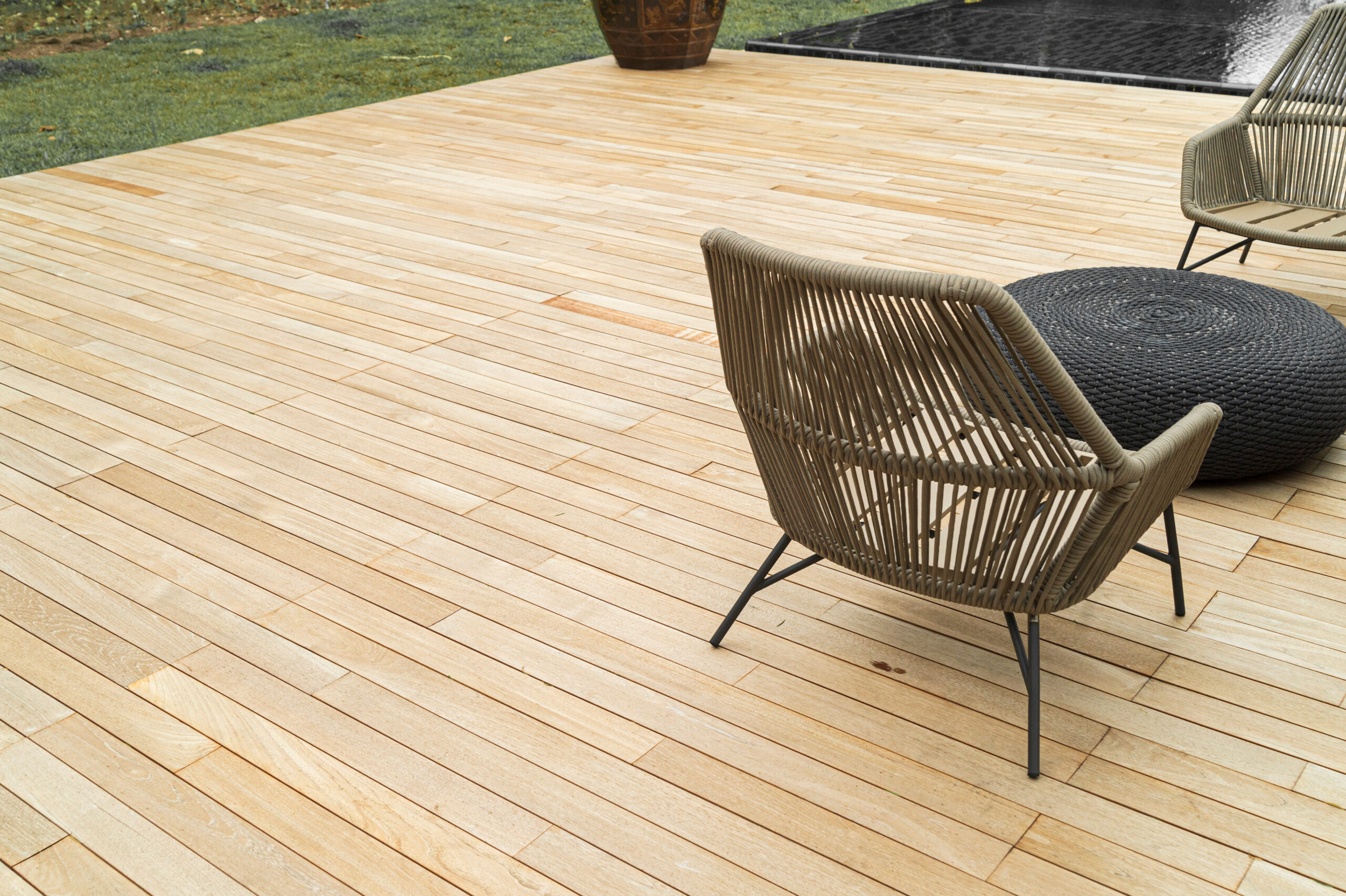
Teak wood is celebrated for bathrooms, spa areas, pool surrounds, and yacht decks because its dense grain and natural oils resist water and decay. It weathers humidity without warping and stays non-slip when wet. Its warm golden hue and straight grain lend any space a high-end aesthetic. For example, Florida Teak even stocks ¾″×1.5″ teak strips designed for shower grates and spa floors, ensuring proper drainage and style.
Why Teak Excels in Moist Environments
- Natural Oil and Silica Content: Teak contains abundant natural oils (and some silica) that repel water and pests. Even untreated teak resists rot and insects better than most woods.
- Decay and Insect Resistance: Teak heartwood is rated “very durable” against decay. It’s famous as the “gold standard” for marine use. Teak also resists termites and mold, making it ideal for constantly damp areas like showers and boat decks.
- Dimensional Stability: With very low shrinkage (about 2.6% radial, 5.3% tangential), teak remains stable through humidity changes. Its high density (~655 kg/m³ at 12% moisture) means floors stay solid and crack-free in steamy bathrooms or tropical climates.
- Slip-Resistance: Teak’s slightly oily, textured surface provides natural traction. Even when wet, teak stays grippy underfoot – a safety plus in showers, pool decks, or yacht gangways.
Image: Teak decking on a yacht. Teak’s moisture resistance and anti-slip surface make it perfect for luxury boats and wet areas.
Teak in Bathrooms, Yachts, and Pool Areas
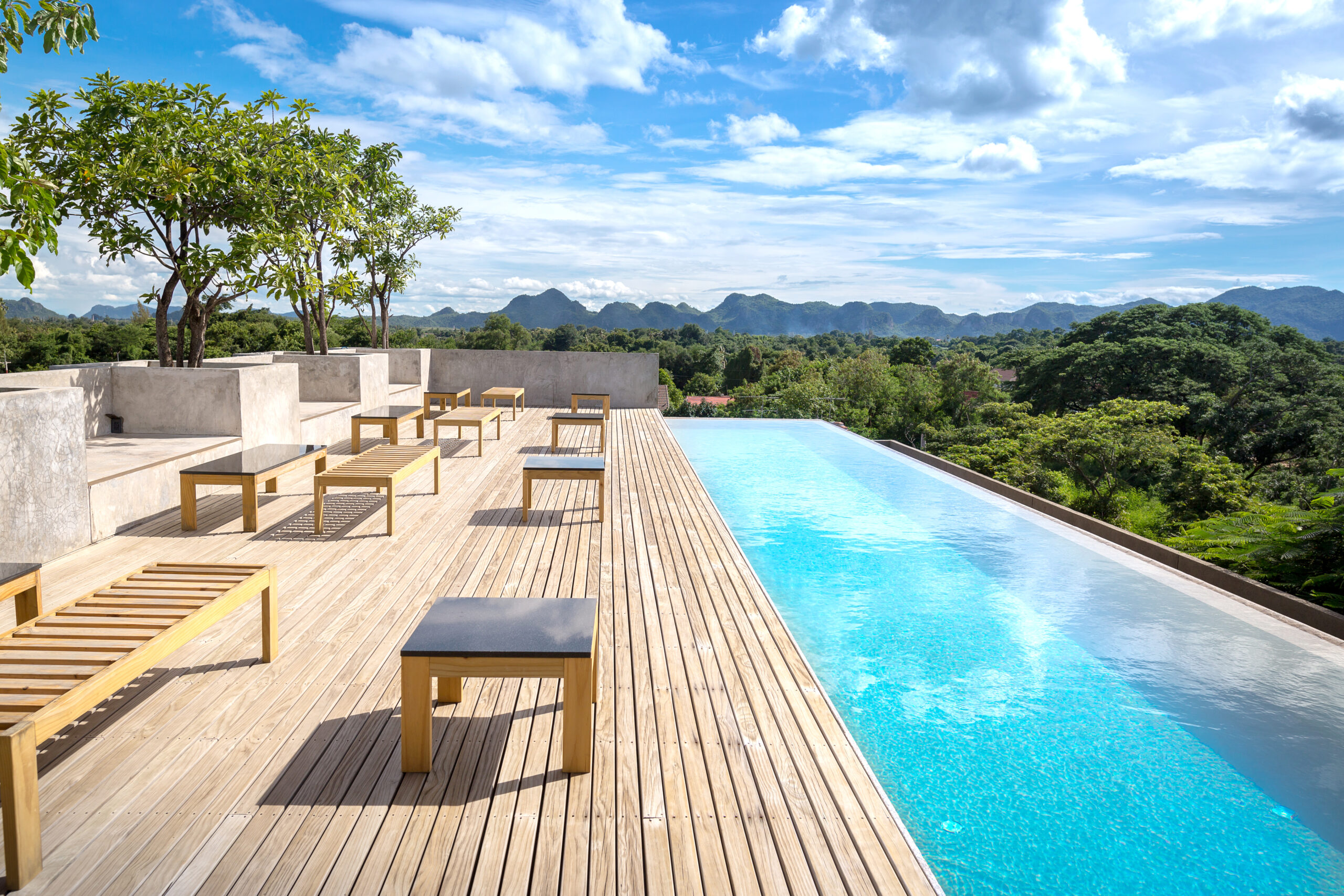
Teak’s maritime heritage carries over to any high-end wet setting. Its rich golden-brown hue and distinctive grain add warmth to bathrooms, poolside lounges, and spa retreats. More importantly, the wood’s durability allows it to thrive on constantly wet surfaces. For example, teak resists mold and mildew and remains firm underfoot even when soaked. This is why yacht builders long relied on teak for decks and interiors. Today, spa designers similarly select teak flooring and grates to combine luxury with performance. As one supplier notes, true Burmese teak is the “gold standard” in yacht construction and patio decking, prized for unmatched durability.
Concrete or tile can become chilly and slippery when wet, but teak stays comfortably warm and safe. Its oils make water bead up on the surface, so spills and shower spray don’t soak in. In fact, Florida Teak offers teak strips (¾″×1.5″) specifically engineered for shower floors and spa grates. These narrow planks allow water to flow away easily while maintaining a continuous wooden surface. The result is a spa-like feel underfoot: teak transforms a bathroom into a luxurious retreat and a pool deck into an elegant lounge.
Comparing Teak with Other Premium Materials
While teak is exceptional, it’s helpful to see how it stacks up against other high-end choices:
- Brazilian Walnut (Ipe): Ipe is a very dense South American hardwood. Its hardness is about 3510 lbf on the Janka scale—over three times that of teak. Ipe resists decay and wear even longer (often 50–70 years outdoors) and is virtually impervious to rot and insects. However, this hardness means Ipe is much heavier, harder to cut, and usually more expensive. Teak is softer (~1070 lbf), so it dents more easily but is easier to mill and install. Teak’s natural oils give it better performance in salty, marine environments than most other woods. In short, Ipe lasts longer under extreme use, but teak offers a classic warmth and easier workability in yacht or bathroom contexts.
- Bamboo (Engineered): High-end bamboo flooring can score very high on hardness (1,700–4,600 lbf), making it surprisingly tough. It’s renewable and often used indoors. However, bamboo tends to swell or delaminate if exposed to prolonged moisture. Teak’s natural oils and tight grain make it far more resistant to humidity and wetting than bamboo. Practically, bamboo might be a cost-effective indoor choice, but teak will far outlast it in a bathroom or damp spa.
- Composite Decking: Modern synthetic composites (plastic-wood mixes) are popular for low-maintenance decks. High-quality polyurethane composites can last 20+ years without warping or rot. They don’t need sanding or sealing. However, composites can heat up in the sun and often look less “natural.” Unlike teak (an insulator), dark composite planks can become uncomfortably hot. Composites may fade or stain over time, whereas teak weathers to a pleasant silver patina. Also, composites usually require factory joints (butt joints) and cannot easily be repaired like real wood slats can. In luxury applications, teak is often preferred for its authentic beauty and natural cooling underfoot, even if composites have slightly longer nominal lifespans.
Technical Specifications of Teak Wood
Teak’s strength and dimensions make it ideal for flooring. Key specifications include:
- Janka Hardness: ~1070 lbf (4,740 N). This is stronger than many common woods but softer than Ipe.
- Density: ~655 kg/m³ (40.9 lb/ft³) at 12% moisture. Teak is quite heavy and rigid.
- Shrinkage: Radial ~2.6%, Tangential ~5.3% (T/R ratio ≈2). Such low shrinkage means teak planks stay flat and true, even under humidity swings.
- Durability: Class I (very durable). Teak heartwood resists rot and decay “far beyond” typical lumber. Its natural oils make it highly water-resistant.
- Grain/Texture: Straight to wavy grain, medium-coarse texture, usually quarter-sawn for stability. Surfaces have a slight oily feel from the wood’s resins.
- Typical Flooring Profiles: Manufacturers commonly mill teak flooring to ¾″ thickness for strength and refinishing, with plank widths from about 4–6″. (Florida Teak notes that ¾″×4–6″ tongue-and-groove boards are standard for residential use.) Narrow teak strips (¾″×1.5″) are popular for shower floors and yacht decks.
- Moisture Content: Teak equilibrates around 12–14% MC in indoor conditions, but can tolerate very high humidity. The wood’s oils slow moisture uptake, so teak won’t warp or cup as readily as oak or pine in a bathroom.
These specs explain teak’s stability: floors remain flat, and threshold gaps stay tight, even after years of seasonal humidity.
Maintenance & Care for Teak Floors
Routine care keeps teak looking superb. Teak does not require heavy maintenance, but simple cleaning and periodic oiling (if you want to preserve the golden color) extend its life. For example, a recommended regimen includes light scrubbing every few weeks and occasional oiling:
- Routine Cleaning: Wipe or gently scrub the teak surface with a soft brush and mild soap every few weeks or after heavy use. This removes soap scum, body oils, or chlorine that can build up. Always scrub along the grain. Avoid harsh detergents and power washers (these can erode the soft fibers). Rinse thoroughly and let the wood air-dry completely.
- Deep Cleaning: About once a year (or when the wood looks gray), use a commercial teak cleaner or a fine sandpaper to lift surface dirt and restore the grain. Light sanding will remove the silvery patina if you want a fresh look. Afterward, wash away debris and let it dry.
- Oiling (Optional): If you prefer teak’s honey-gold tone, apply a teak oil or exterior wood sealer after cleaning. Outdoor teak often ages to silver if left untreated, so oiling preserves its warm hue. Indoors, oiling every 3–6 months can revive the luster. Note, however, that oiling doesn’t waterproof the wood – it’s mainly cosmetic. Many people skip oil on exterior decks to avoid constant upkeep.
- Avoid Excess Water: Teak tolerates water, but standing pools can still encourage mold on any wood. In showers or boat heads, ensure trays or mats drain well. After heavy use, towel off puddles. Remove bath mats after showering to let everything dry. This prevents mildew between boards.
- Outdoor Care: On patios or docks, just rinsing with a hose periodically is usually enough to remove dirt and salt. Teak will still age gracefully under UV – if a deep clean is needed, lightly sand or use a mild soapy wash. For best longevity, cover teak furniture or shower grates during long rainy seasons to minimize relentless moisture.
Overall, teak flooring doesn’t require refinishing as often as many other woods. If left to weather, it simply turns a silver-gray patina while retaining strength. If you do oil and refresh it, a properly maintained teak floor can easily last 30–50 years indoors (and several decades outdoors). The key is gentle care: clean, dry, and moderate oiling.
Conclusion
For luxury homeowners, designers, and yacht or hotel builders, teak flooring offers a unique blend of beauty and performance. Its natural water resistance, durability, and non-slip finish make it the unrivaled choice for showers, spa decks, and marine interiors. Teak’s warm color and grain pattern imbue any space with elegance, and it outperforms many other exotic woods and synthetics in wet conditions. While initial cost is higher, teak’s decades-long lifespan and low upkeep repay the investment. In the words of experts, teak is “the gold standard” of outdoor woods, with an “outstanding resistance to decay and rot”.
With proper cleaning and seasonal care, teak floors can remain gorgeous and functional for generations. Whether grounding a yacht cabin or spa retreat, teak ensures that every step is both safe and sumptuous. (For example, offers sustainable, FSC-certified teak milled to precise dimensions – such as ¾″×1½″ strips for shower grates or wide tongue-and-groove boards for indoor floors.) In sum, teak flooring brings unparalleled luxury and longevity to your wet-area designs, marrying high-end style with steadfast reliability.